


 24 Sep, 2026
American, United and Delta Expand Premium Travel Assistance
24 Sep, 2026
American, United and Delta Expand Premium Travel Assistance
MundoTrip | Travel News | 28 April, 2026
Flying in America has rarely felt this unpredictable. After years of post-pandemic recovery, the US aviation system in 2026 is facing a convergence of pressures, rising fuel costs, a TSA staffing crisis, overcrowded airports, and airlines that scheduled far more flights than the system can reliably handle. The result is a travel environment where delays are frequent, fares are climbing, and summer 2026 is shaping up to be one of the most turbulent travel seasons in recent memory.
If you are planning to fly anywhere in the United States this summer, understanding what is happening and why could make a significant difference in how you plan, what you pay, and what you do when things go wrong.
Jet fuel prices have risen significantly in 2026, and most major US airlines have acknowledged that ticket prices are reflecting that change. United Airlines CEO Scott Kirby has been straightforward about it that fare increases are necessary to keep up with fuel costs, describing it as "the new normal for airfares."
That said, demand for summer travel remains strong, and airlines are still competing for your business. If your dates are flexible, shopping around across carriers and departure days can still turn up reasonable fares. The key takeaway is to book sooner rather than later, prices are unlikely to fall as summer approaches.
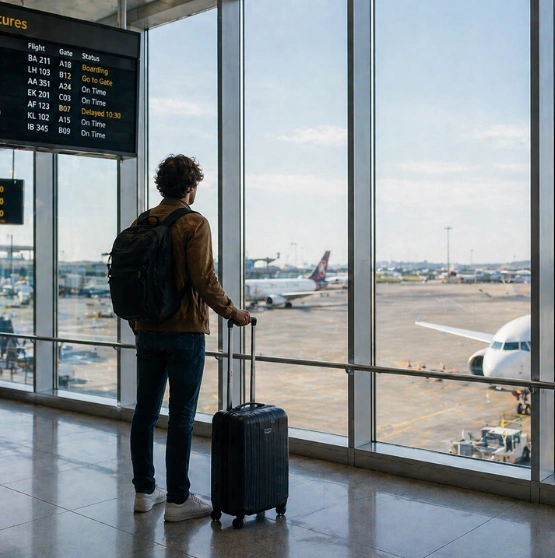
Airlines scheduled more flights through Chicago O'Hare this summer than the airport can reliably handle. The FAA stepped in and capped daily operations from June 2 through October 24, which means airlines are adjusting their schedules, and that is actually good news for reliability. Last summer, only about half of O'Hare's flights operated without delays during peak months. The cap is designed to prevent a repeat of that.
If your itinerary connects through Chicago, keep an eye on your booking over the coming weeks. Your airline may adjust your flight time or routing, and in most cases will notify you directly. Staying on top of it early gives you more options if a change does not work for your schedule.
Getting to your gate has become a problem of its own. A partial government shutdown that began in February 2026 left TSA officers classified as essential employees working without full pay for weeks. The financial strain caused absentee rates to surge at airports across the country and led to more than 300 TSA officers resigning from the agency.
The consequences are visible at security checkpoints in every major American airport. Houston Hobby Airport reported 55 percent of its TSA staff calling out on a single day. Atlanta Hartsfield-Jackson, the busiest airport in the world, saw absentee rates reach as high as 38 percent. Security lines stretching for several hours have been reported at JFK in New York and other major hubs.
This matters beyond the inconvenience of waiting longer. When security is slow, passengers miss flights. Missed flights require rebooking onto already-full aircraft, which forces airlines to hold gate departures, which places aircraft out of position for their next rotation. A 45-minute security queue early in the morning can cascade into a multi-hour departure delay by the afternoon at a hub hundreds of miles away. The TSA staffing problem is not just inconveniencing individual travelers it is actively compounding the delay and cancellation numbers that the entire system is producing.
United Airlines has responded to the fuel cost crisis by cutting 5 percent of its flights for the next six months. The airline's CEO has confirmed it is not furloughing staff or delaying aircraft orders, and international long-haul service remains scheduled as planned. The reductions are concentrated on regional routes and domestic flights that do not connect United's major hubs, Chicago O'Hare, Denver, Houston Intercontinental, Los Angeles, Newark, San Francisco, and Washington Dulles.
Industry data from AirInsight confirms that the post-pandemic surge in US domestic air travel has now entered what analysts are calling a maturity phase. The explosive growth that followed the reopening of travel has leveled off. Airlines are still betting on growth by maintaining ambitious schedules, but actual passenger traffic is growing at a slower pace than those schedules assume. If demand does not accelerate to match airline capacity plans by the third quarter of 2026, analysts expect further schedule corrections, meaning additional cuts, consolidations, or route suspensions heading into the winter.
The combination of higher fares, schedule cuts, staffing shortages, and a system running at or beyond capacity creates a travel environment where flexibility and preparation matter more than usual. Here is what every American traveler should be doing right now.
Book flights sooner rather than later. Fares are rising and are not expected to fall while fuel costs remain elevated. If your summer travel dates are set, locking in your tickets now is the better financial decision compared to waiting.
Allow significantly more time at the airport. Given TSA staffing shortages at major hubs, the standard recommendation of arriving two hours before a domestic flight is no longer sufficient at busy airports. Add at least 30 to 45 additional minutes to your normal pre-departure window, particularly if you are flying through Atlanta, Chicago, New York, or Houston.
Check your itinerary regularly between now and your travel date. With airlines making ongoing schedule adjustments particularly through Chicago O'Hare your flight times, aircraft type, or routing may change before you travel. Monitor your booking directly through your airline's app and make sure your contact information is up to date so you receive notifications.
Do not book tight connections. In a system generating thousands of delays daily, a 45-minute connection that looks fine on paper is a genuine risk. If you are connecting through a busy hub, choose the longest connection time your schedule allows.
Understand what you are owed when flights are disrupted. Under US Department of Transportation rules, if your airline cancels a flight or makes a significant change to your itinerary, you are entitled to a full refund of the unused ticket if you choose not to accept the alternative offered. You do not have to accept a rebooked flight. If a disruption is within the airline's control, ask about meal vouchers and accommodation assistance. Keep all receipts for any out-of-pocket expenses.
Consider travel insurance for this summer specifically. Given the elevated disruption risk, a policy that covers trip interruption, missed connections, and accommodation costs is a more valuable safety net than it would be in a typical travel year.
One additional pressure point worth noting: the 2026 FIFA World Cup is being hosted across the United States, Canada, and Mexico this summer. US host cities include Atlanta, Dallas, Los Angeles, Miami, New York, Philadelphia, San Francisco, Seattle, Kansas City, and Boston. Federal officials have already expressed concern about whether airport infrastructure in these cities is adequately equipped to handle the hundreds of thousands of international visitors arriving for tournament matches. If you are traveling through any of these cities during the tournament period, build extra time and flexibility into your plans.
Flying in the United States this summer will cost more, involve longer waits, and carry a higher risk of disruption than it has in recent years. That does not mean travel is impossible or not worth planning, but it does mean that the gap between a well-prepared traveler and an unprepared one is wider than usual. Book early, arrive early, stay flexible, and know your rights.
MundoTrip is monitoring conditions across the US aviation network and is available to assist customers with bookings, itinerary adjustments, and guidance when things go wrong.
 24 Sep, 2026
American, United and Delta Expand Premium Travel Assistance
24 Sep, 2026
American, United and Delta Expand Premium Travel Assistance
 24 Sep, 2026
Southwest Expands Caribbean Network With New Puerto Rico Routes
24 Sep, 2026
Southwest Expands Caribbean Network With New Puerto Rico Routes
 24 Sep, 2026
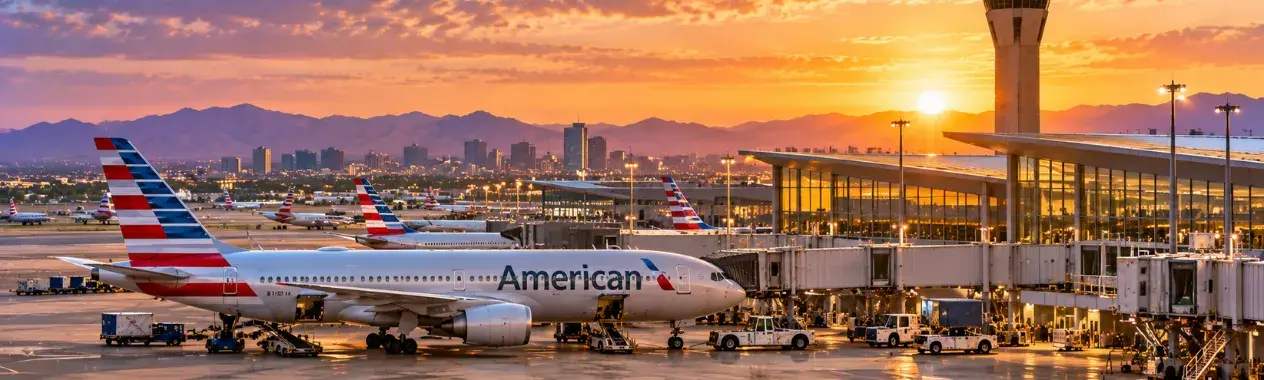
American Airlines to Anchor Phoenix Sky Harbor’s New West Terminal
24 Sep, 2026
American Airlines to Anchor Phoenix Sky Harbor’s New West Terminal
 24 Sep, 2026
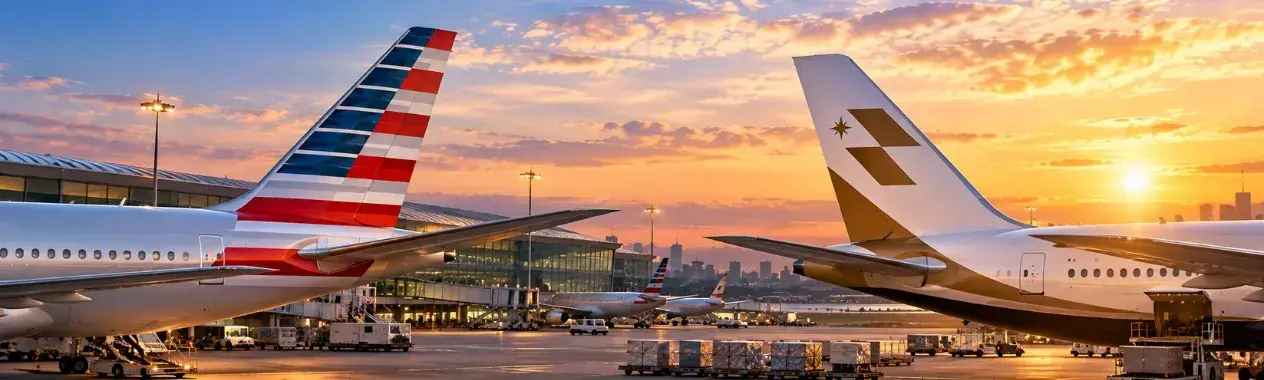
American Airlines and STARLUX Launch New U.S.–Asia Codeshare
24 Sep, 2026
American Airlines and STARLUX Launch New U.S.–Asia Codeshare
 24 Sep, 2026
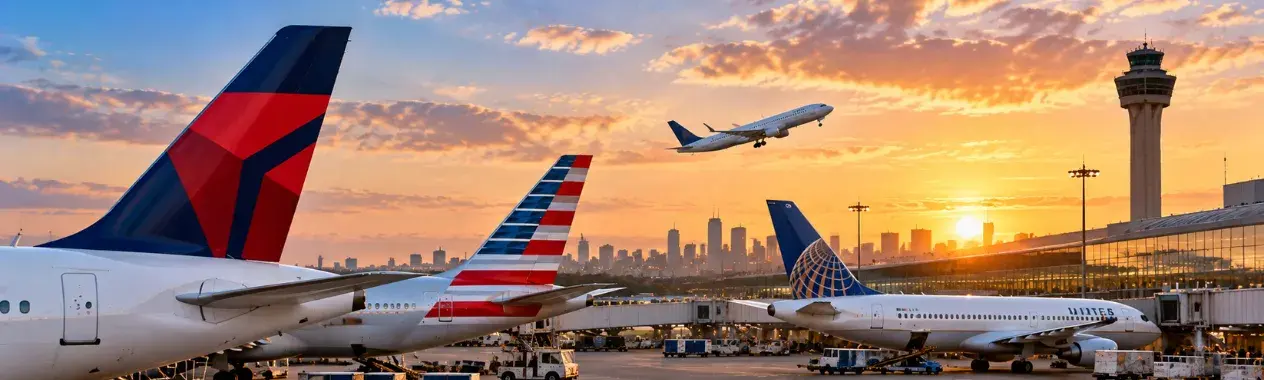
Delta, American and United Reshape U.S. Flight Networks in 2026
24 Sep, 2026
Delta, American and United Reshape U.S. Flight Networks in 2026


Got Questions? Call us 24/7!
1-866-331-1746
Email for Us!
support@mundotrip.com
35 Journal Square Suite 424, Jersey City, NJ 07306






Copyright © 2026 Mundo Trip registered in New Jersey, United States Of America