


 14 Sep, 2026
Delta Cuts 3 New York Routes for Winter 2026–27
14 Sep, 2026
Delta Cuts 3 New York Routes for Winter 2026–27
Mundotrip | Travel News | 14 September 2026
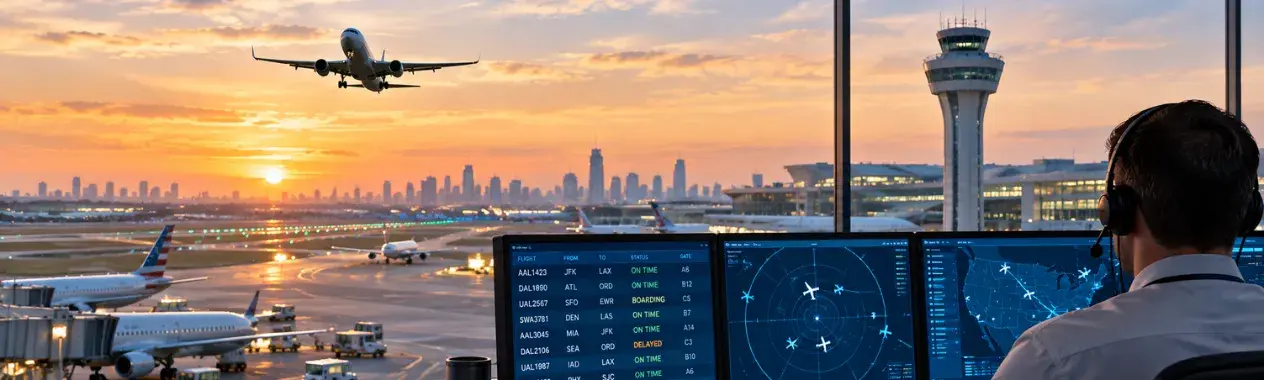
The Federal Aviation Administration is beginning to roll out a new technology system designed to help reduce flight delays and improve how air traffic is managed across the United States.
FAA Administrator Bryan Bedford met with the chief executives of several major U.S. airlines to discuss the rollout of the agency's new Strategic Management of Airspace, Routes, and Trajectories, known as SMART. The system is expected to begin its initial rollout in September 2026 as part of a broader effort to modernize the U.S. air traffic control system.
For travelers, the technology could eventually mean better management of congested airspace, improved recovery after weather disruptions and fewer avoidable delays. However, SMART is still being introduced, so travelers should not expect it to immediately eliminate flight delays or cancellations.
The FAA announced in June that it had awarded Air Space Intelligence an $875 million, 12-year contract to develop and deploy two complementary technologies: Flow Management Data and Services (FMDS) and Strategic Management of Airspace, Routes, and Trajectories (SMART).
The FAA says SMART is designed to give aviation authorities and operators a more detailed, predictive view of the U.S. airspace system. The technology can analyze information including airline schedules, weather, airport capacity, airspace conditions and other operational constraints to identify potential congestion and conflicts before they create larger problems.
The FAA originally said initial operations were planned for fall 2026. Reuters reported in September that the agency was preparing to begin the rollout this month following discussions with major airline executives.
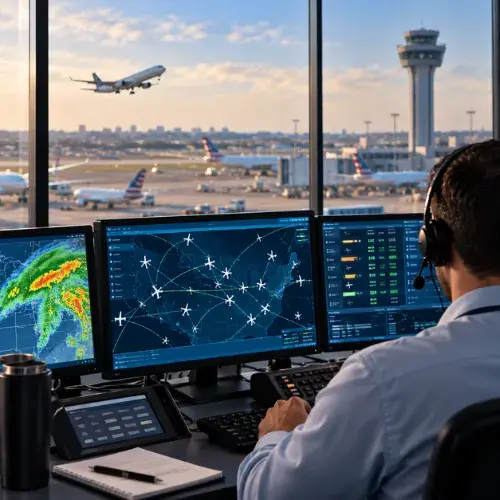
Flight delays can spread through an airline's network when weather, airport congestion or airspace restrictions disrupt one part of the system. A delayed aircraft can arrive late for its next flight, while limited airport or airspace capacity can create additional delays for other aircraft.
SMART is intended to help aviation officials identify these problems earlier and make better-informed decisions about flight schedules and trajectories.
The system uses predictive data to help assess how changes in weather, airport capacity, airline schedules and airspace conditions could affect the wider network. By identifying potential conflicts before flights depart, the FAA expects to have more opportunities to manage traffic before congestion becomes more severe.
This does not mean every delayed flight will be prevented. Weather, mechanical problems, airport restrictions, air traffic control requirements and other factors can still affect flight operations.
One of the initial applications of SMART is expected to involve the recovery and rescheduling of flights affected by severe weather.
Weather-related disruptions can leave airlines with large numbers of canceled or delayed flights that need to be reorganized. With limited aircraft and airport capacity available, restoring the schedule can be difficult, particularly when disruptions affect a major hub.
Reuters reported that the initial use of SMART is expected to focus on helping airlines and the FAA reschedule flights following weather-related cancellations. The technology could subsequently be used more broadly for strategic coordination of flights before departure.
For passengers, better disruption recovery could eventually help airlines return to normal operations more efficiently after major weather events.
Bedford's September meeting included executives from some of the country's largest airlines, including American Airlines, Delta Air Lines, United Airlines and Southwest Airlines. The discussions focused on the planned SMART rollout and ways the technology could be incorporated into airline operations.
The involvement of major carriers is important because delays often involve multiple parts of the aviation system. An airline may be able to adjust its own schedule, but airport capacity, weather and national airspace restrictions can affect the same flights.
The FAA's goal is to improve coordination by giving the relevant aviation operators better information about developing conditions.
For people flying within or from the United States, the most important potential benefit is better management of disruptions before they spread across the aviation network.
If the system works as intended, travelers could eventually benefit from:
The FAA has specifically identified avoidable delays, additional fuel consumption and missed passenger connections among the problems that improved planning could help address.
However, these are expected benefits rather than results already demonstrated by the new system. SMART is only beginning its operational rollout, so there is not yet enough evidence to determine how much it will reduce delays nationwide.
The new technology is one component of a much larger effort to modernize the country's air traffic control infrastructure.
The FAA's contract with Air Space Intelligence covers 12 years and is valued at $875 million. Separately, Congress has approved billions of dollars for the broader modernization of the U.S. air traffic control system.
The broader modernization effort is aimed at improving the technology and infrastructure used to manage increasingly complex air traffic across the United States.
For travelers, the significance is that SMART is being introduced as part of a wider effort rather than as a standalone fix for flight delays.
The FAA's September rollout marks an important step toward using more predictive technology to manage U.S. air traffic.
Rather than waiting for congestion to develop and then responding to it, SMART is intended to help the FAA and airlines identify potential problems earlier and coordinate their response using a shared view of schedules, weather, airport capacity and airspace conditions.
For U.S. travelers, the potential payoff is straightforward: fewer avoidable disruptions and better recovery when major problems occur.
But the technology is still in its early stages. As SMART moves into operational use, its actual effect on delays and cancellations will become clearer.
Flight delays, cancellations, or schedule changes can sometimes make travel plans difficult to manage. If you need assistance with your journey or have questions about your travel plans, you can connect with a MundoTrip travel expert 24×7 for personalized travel support.
 14 Sep, 2026
Delta Cuts 3 New York Routes for Winter 2026–27
14 Sep, 2026
Delta Cuts 3 New York Routes for Winter 2026–27
 14 Sep, 2026
Delta Adds Live NFL Sports Streaming to International Flights
14 Sep, 2026
Delta Adds Live NFL Sports Streaming to International Flights
 14 Sep, 2026
AirBaltic Files for Chapter 11 in U.S.: What Travelers Need to Know
14 Sep, 2026
AirBaltic Files for Chapter 11 in U.S.: What Travelers Need to Know
 14 Sep, 2026
United Launches First U.S.–Sapporo Nonstop Route in December 2026
14 Sep, 2026
United Launches First U.S.–Sapporo Nonstop Route in December 2026
 12 Sep, 2026
Air France Adds 4th Miami–Guadeloupe Flight for Winter 2026
12 Sep, 2026
Air France Adds 4th Miami–Guadeloupe Flight for Winter 2026


Got Questions? Call us 24/7!
1-866-331-1746
Email for Us!
support@mundotrip.com
35 Journal Square Suite 424, Jersey City, NJ 07306






Copyright © 2026 Mundo Trip registered in New Jersey, United States Of America